Theme
← Back to Work
Case Study — 01

Tennessee
Department of
Transportation

Statewide Infrastructure Design · 5 Interconnected Platforms
5
Interconnected platforms shipped
100K+
Monthly public users via Smartway
6 Years
Application Architect · statewide scope
Client — Tennessee DOT
Years — 2013–2019
Role — Sole Designer → Design Lead
Teams — Up to 5 concurrent scrum teams
Application Architect Sole Designer → Design Lead Design System Government Infrastructure Public Safety Offline-First Front-End Implementation
From first designer to design lead — six years building Tennessee's transportation technology infrastructure.

TDOT's technology division was modernizing how the state managed, monitored, and communicated transportation infrastructure across all regions of Tennessee. I joined as the first designer into an environment with no patterns, no system, and no precedent. Over six years I built the design function from the ground up while shipping five platforms that together form the state's operational infrastructure stack.

Shipping in state government is a different kind of hard. Procurement timelines, state-mandated hardware, legacy IT infrastructure, protected staff roles, and political pressure to accelerate projects for non-product reasons are the operating conditions, not exceptions to them. Every decision had to survive that environment and still produce something worth using.

At peak I was working across five concurrent scrum teams, each with its own product owner and 3–5 engineers, while also participating in executive-level product planning sessions with the CIO, CEO, architects, and POs to shape what got built next. The department recognized this scope formally by giving me the title Application Architect to distinguish my role from conventional design. When we hired a second designer, I wrote the institutional UX hiring criteria that defined what good design judgment looked like for state government work. She took on MQA and additional platforms from there, bringing her own research and design direction to work that built on the shared foundation we had established.

My work at TDOT ran the full vertical range of the organization, from field inspectors entering data on tablets at low-connectivity job sites to the commissioner's office, where I also contributed to public presentations and statewide communications.


Five platforms. One connected infrastructure stack — from field inspector to public driver, from contractor invoice to commissioner's desk.

Each platform served a distinct user base and operational function, but they were structurally interdependent. SWIFT generated the incident data that Smartway surfaced publicly. DWR fed the financial oversight systems that ODA and EDFS helped govern. Designing across all five simultaneously required holding the full system in view, not just the screen in front of me.
Internal Operations
SWIFT
2013–2014, extended with Smartway
Active traffic management platform for TDOT operations staff. Monitors and manages live roadway incidents across Tennessee's four regions, headquarters, and field offices. The primary data source feeding Smartway's public-facing incident layer.
Hundreds of users — regional operators, field staff, video surveillance
Public Platform
Smartway
2014–2016
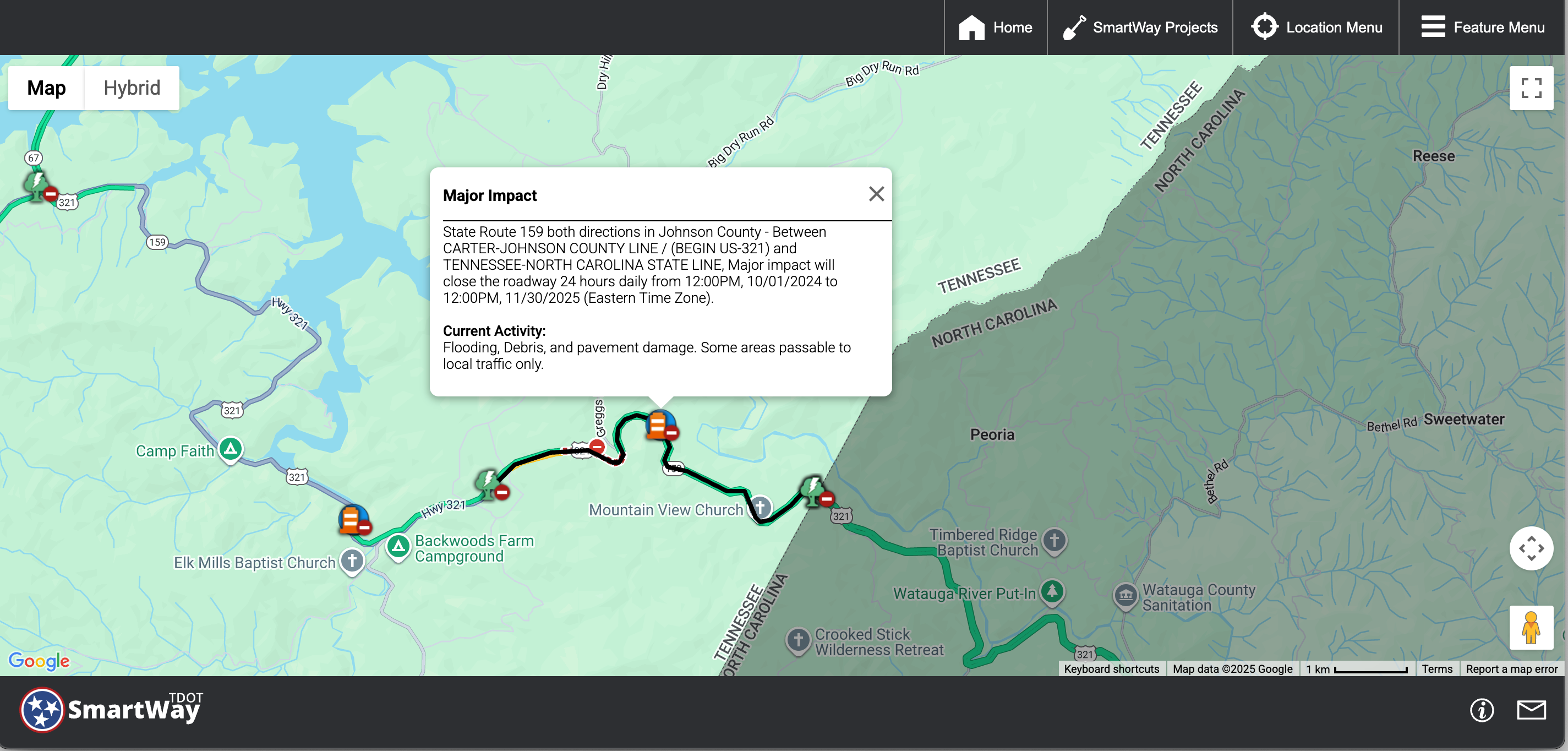
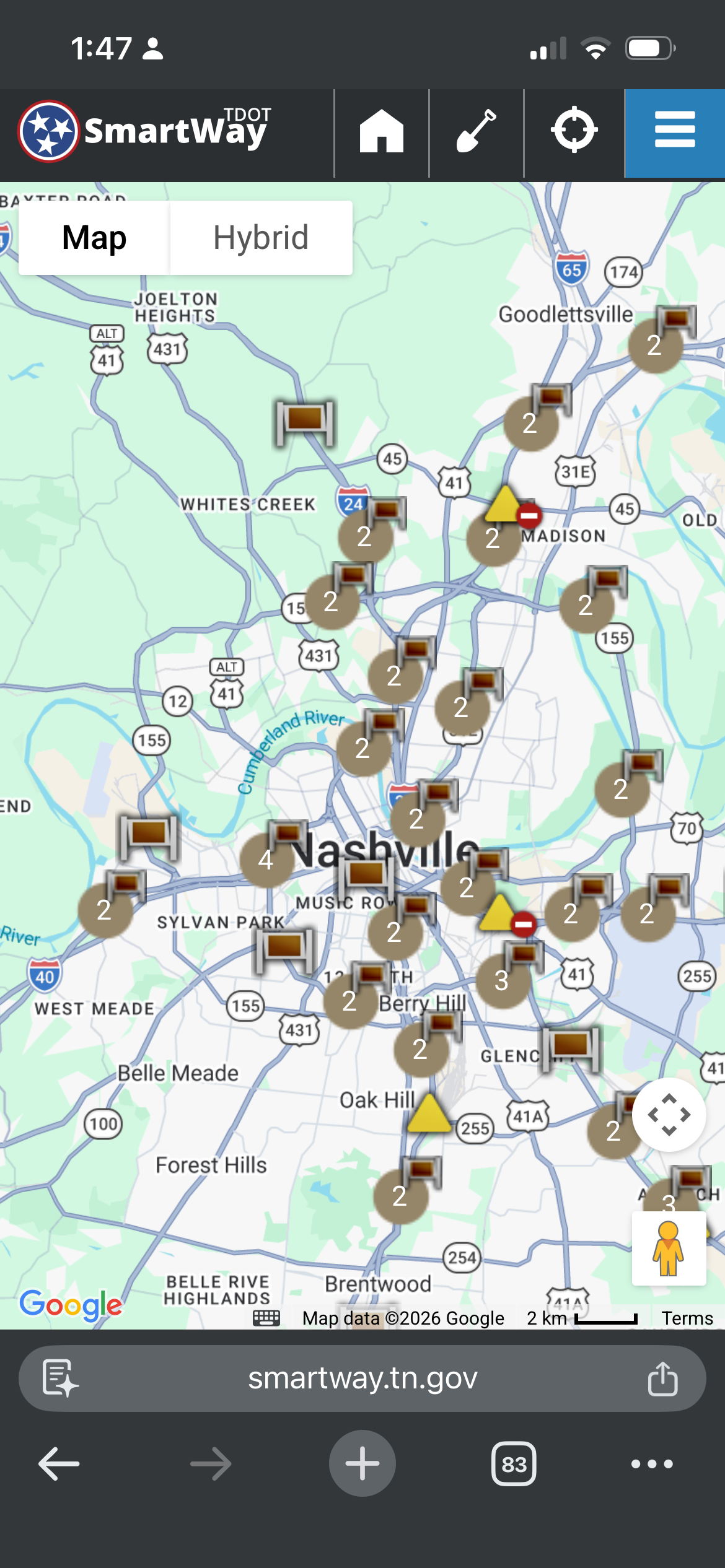
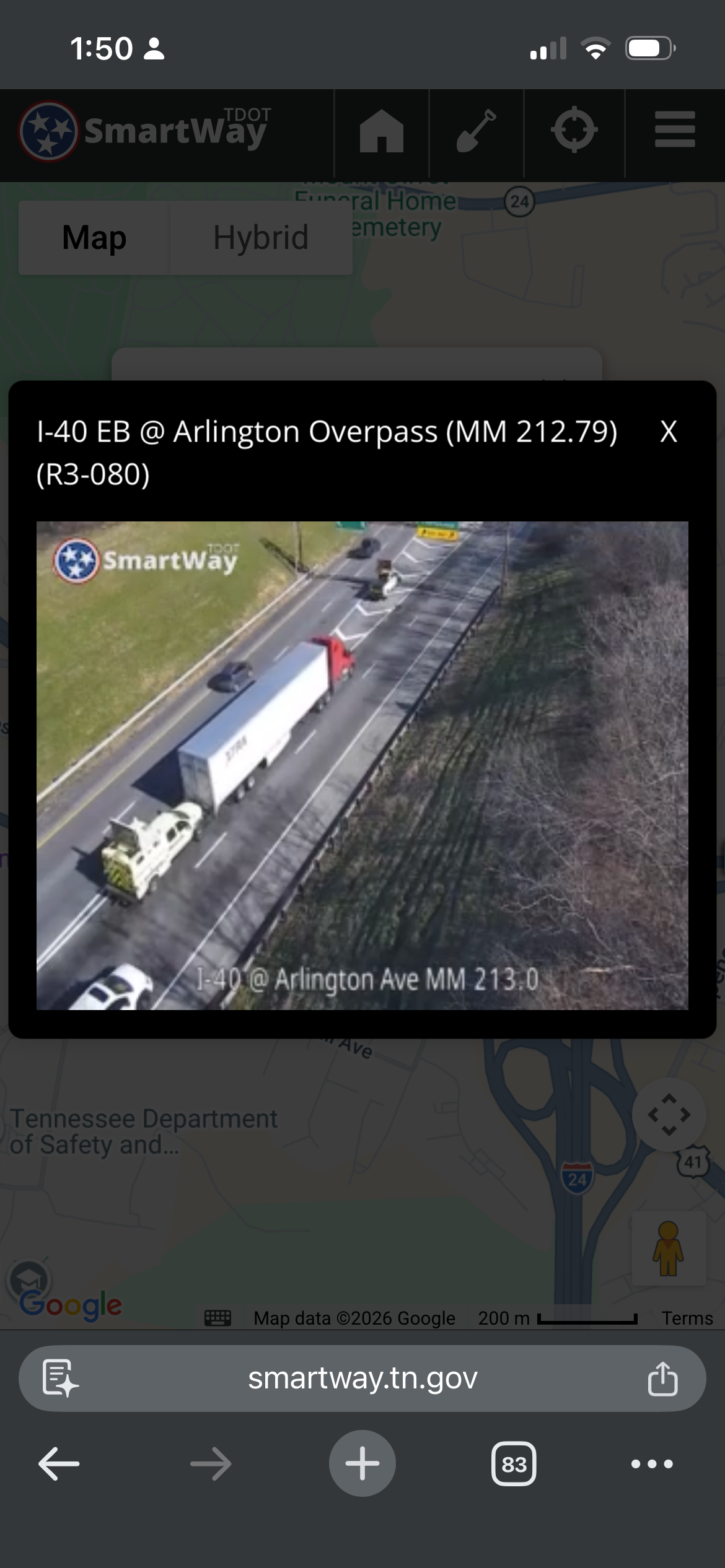
Tennessee's public transportation information platform. Surfaces real-time roadway conditions, incidents, camera feeds, and dynamic message signs statewide. Designed for reliability during active travel and emergency conditions across desktop and mobile.
100,000+ monthly users statewide
Field Reporting
DWR
2015–2017
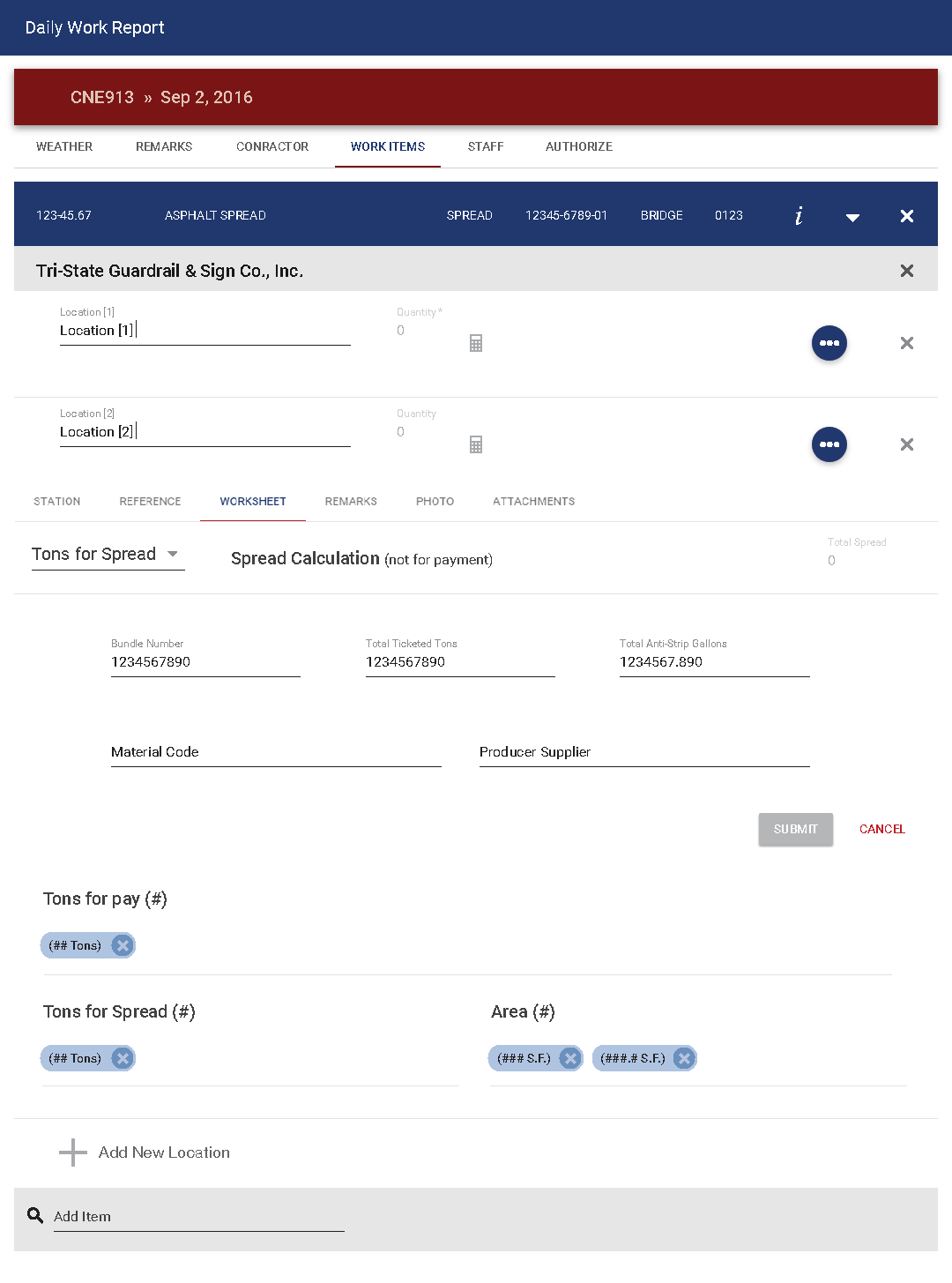
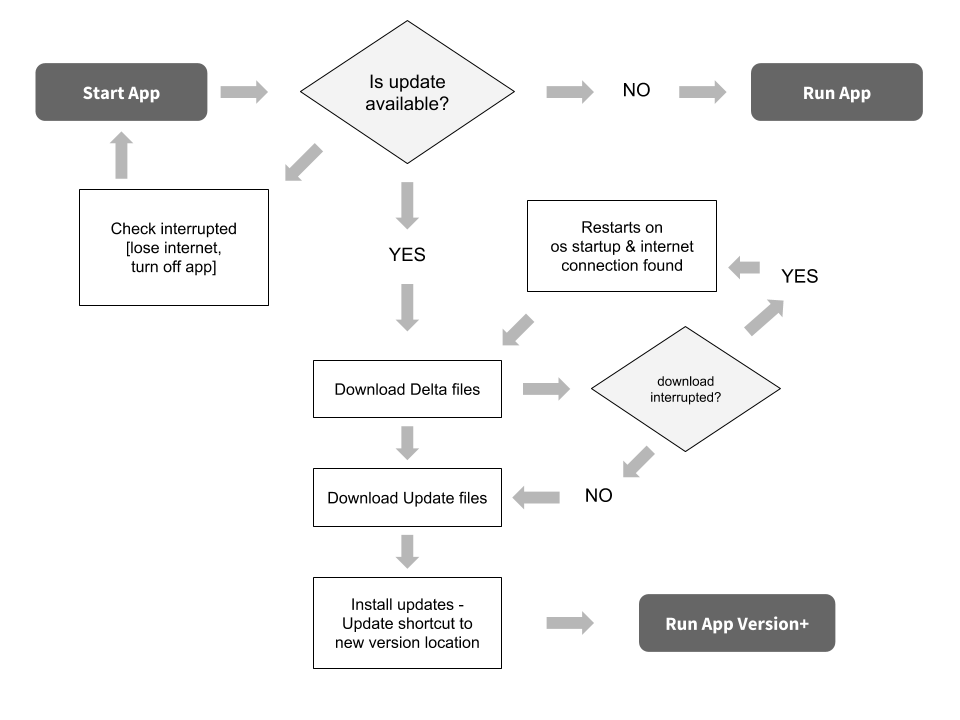
Daily Work Report: offline-first field reporting platform for transportation inspectors on active job sites across Tennessee. Replaced paper-based, fragmented workflows with a unified system where federal and state measurement specs are encoded directly into adaptive worksheets. Inspectors verify their work rather than memorize the rules. Data persists on-device in a protected file structure until confirmed by the backend, removing the possibility of accidental loss in the field.
500+ users across TDOT's two largest divisions
Contract Management
ODA
2015–2016
Internal platform for billboard licensing, contractor payment processing, and permit management. Designed within strict constraints imposed by state IT's existing payment gateway infrastructure. The challenge was clarity and reliability within a system I couldn't change.
~6 specialized internal users
Financial Management
EDFS
2016–2018
ED Financial System: full contractor financial lifecycle management. Consultant company database, contract creation and tracking, work orders tied to contract totals, invoice approval and payment processing. Four sequential releases from company DB through invoice reconciliation.
Internal finance and project management staff
Infrastructure Assessment
MQA
Initiated, handed off
Roadside maintenance management system for determining level of care and replacement thresholds for infrastructure assets: bridges, guardrails, signs. Initiated the project, defined the architecture, and established the shared design repo, then handed it to the designer we hired with the explicit intention that she bring her own research and design judgment to it. The decisions that shaped MQA as a product were hers.
Internal maintenance and assessment staff
OPERATIONS & REPORTING FINANCIAL PUBLIC DWR Work site inspection MQA Asset inspection SWIFT Incident reporting EDFS Contractor financials ODA Billboard licensing CONTRACTOR PAYMENT MANDATED REGULATORY SYSTEM Smartway Public roadway platform INCIDENT DATA 100K+ MONTHLY PUBLIC USERS
How the five platforms connect — from field reporting to public information

DWR Sync Flow
DWR — system start & sync flow
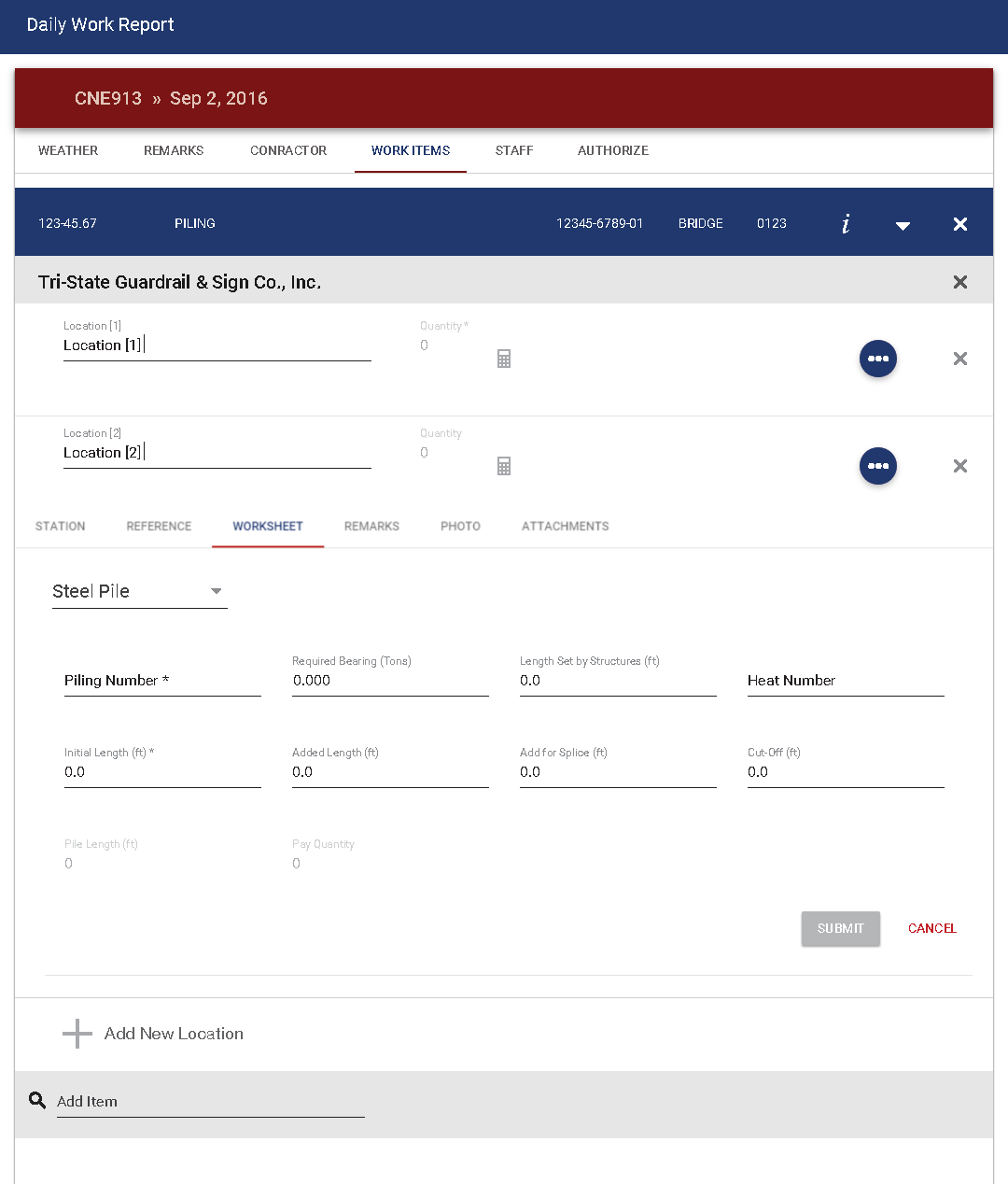
DWR Steel Pile Worksheet
DWR — steel pile worksheet
DWR Asphalt Spread Worksheet
DWR — asphalt spread worksheet
Federal and state measurement specs encoded directly into adaptive material calculation worksheets.
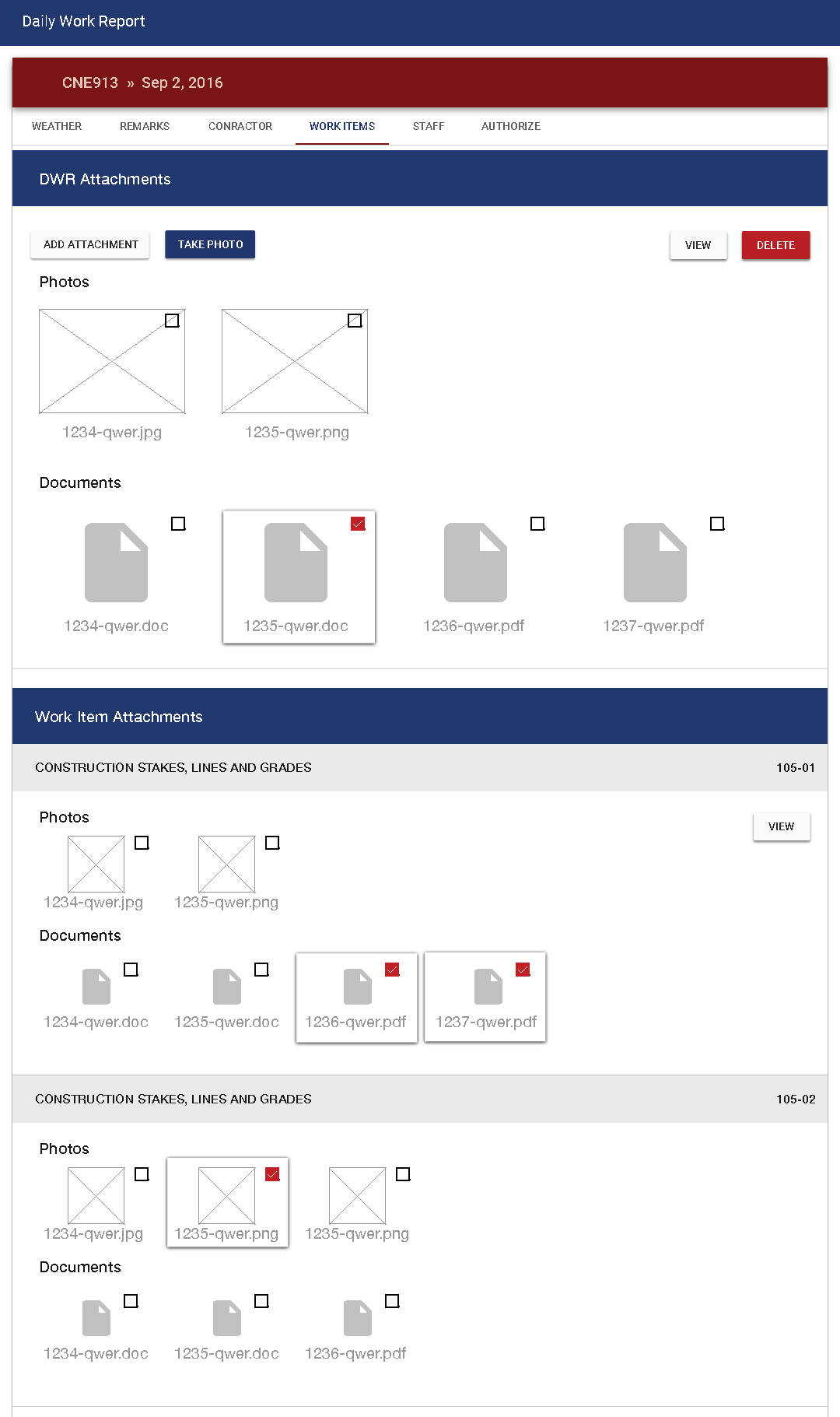
DWR Global Attachments
DWR — global attachments view. Evidence ties to the specific work item it documents, not just the day.
smartway.tn.gov
Smartway Statewide Map
Smartway — statewide roadway conditions map
Smartway Mobile Signs
Smartway — dynamic message signs
Smartway Mobile Camera
Smartway — live camera feed

Having the capability to build something better isn't always a reason to build it.

When SWIFT was ready for mapping, we had everything we needed to do it properly. A full GIS team, a specialist, and a PO pulled from GIS who understood the data deeply. Custom maps would have been genuinely better than anything a third-party tile service could provide.

I argued against it anyway. The maintenance overhead, the ongoing GIS staff dependency, and the taxpayer cost of building something we could get reliably for free were not justified by the usability payoff. I took that argument to the PO, to the GIS team, and all the way to the CIO. The CIO sided with me.

It still stings a little. But the platform shipped with Google Maps and has stayed maintainable ever since, without specialized dependencies or ongoing infrastructure cost. Some decisions show up in what a product costs to own five years after it ships, not in how it looks on launch day.


01
Challenge
New role for the org
I was the first designer. No patterns, no system, no precedent, and an existing web graphics role that needed to be diplomatically managed around rather than replaced.
Response
Early visibility with the commissioner created organic credibility across the org before a single product shipped. Storyboarding and live design sessions became the method for killing bad ideas early, bringing half-formed concepts into the room with POs and lead architects, where making something concrete exposed the problems quickly. Adapted the process to each PO: some thought visually and could react to a mockup immediately, others worked better through written scenarios and needed the logic articulated before the interface made sense. Either way, the goal was the same: decisions made from something real rather than something described.
Result
Institutional design practice established early. Building backlogs with POs and deciding priorities together in the room from the start. Theme and tokenization added to the shared repository, setting a standard for how design decisions translated into code. Multiple UX roles coordinating with teams and POs, a function that outlasted my tenure and had a defined standard to hire against.
02
Challenge
Coordinating at scale
On day one there were no real teams — but there was a strong leadership team with a vision and the will to build something better. Meanwhile, developers were each maintaining their own siloed system, many of whom had built job security into the complexity of what they managed. We built the first scrum team, shipped something better than what existed, then built another. Developers joined as we continued to build wins for the organization and systems moved in-house.
Response
As the teams formed, worked with each PO to build a shared design process, with the goal that they could carry the rationale into planning without me in every room. Identified developers on each team who were strong with frontend work and encouraged leadership to back them in that role, working with them across all five products to keep consistency at the implementation layer as the scale grew.
Result
POs as cross-functional partners, writing UI-agnostic acceptance criteria and running product planning independently. Five concurrent teams operating with cohesive design systems as the org scaled.
03
Challenge
Navigating government reality
State hardware mandates, existing payment infrastructure, procurement timelines, and periodic pressure to accelerate for political reasons. Divisions operated in silos. Removing those silos was the goal from day one.
Response
Shipped MVPs and came back for the rest — practical product thinking as the operating principle. Participated in architectural planning with silo removal as the stated goal from day one. Wins created domain tensions as often as they created allies: construction had its own territory, and products that solved problems in their space required careful handling. The approach was to offer services rather than compete. Public relations never wanted to get into the technology but loved what it produced. Smartway camera feeds going directly to news contacts was exactly their kind of win, and that kind of unexpected ally was worth cultivating.
Result
DWR and SWIFT feeding Smartway's real-time data to 100,000+ monthly users. Division-level siloed systems integrated across the infrastructure stack. Shipping products that made people's jobs easier turned stakeholders into willing partners. The initiative became an asset for leadership rather than a risk, which made it easier to get what we needed to keep building.
04
Challenge
Field environments and reliability
DWR inspectors in low-connectivity field environments where data had to survive the day without connectivity. Help trucks depending on operational data to clear incidents faster and reduce secondary accidents. Infrastructure across divisions was underdeveloped and siloed, which meant building reliably required understanding conditions most designers never encounter.
Response
Field research coordinated up the chain as state structure required. Worked with an architectural group, five people who came into leadership around the same time across their respective disciplines, to understand the physical system constraints before designing around them. Took the dev team, PO, and stakeholders onto an active job site to assess cell coverage, tablet connectivity, and screen readability in real conditions. Got supervisors to let inspectors use devices for documentation before the system went live. SWIFT users walked me through active incidents at their desks. What we learned on one platform fed into the next.
Result
Audit-defensible platform used by 500+ field inspectors statewide, with records that survive the day regardless of connectivity. MQA field inspection pulling from and feeding into DWR and EDFS features by design. Road condition data shared publicly and integrated with Waze and Google Maps, used by news outlets and media. Security, reliability, and operational context defined what features were appropriate and what limitations were necessary.
05
Challenge
Frameworks and infrastructure didn't exist
No shared software design infrastructure. The teams building these platforms were themselves new, created as part of the same initiative that brought me in. The prior model was one developer per system, with complexity kept deliberately high. There was no common foundation because the previous structure had no incentive to build one.
Response
Built and governed a shared design system with Extended Material Design as the base: component rules, usage guidelines, and design specs co-located with developer documentation so stale files triggered review rather than confusion. Worked with teams on frontend framework decisions: evaluated libraries together, entertained options, and went through the real cost of a false start. We moved from Vue.js to React.js. Both were early and evolving, both had existing Material component repos. The switch cost us, and the refactoring work that resulted sat in backlogs waiting for leadership bandwidth between large projects. Built user flow architecture into product planning so the system reflected how people actually moved through the work.
Result
Cohesive system across all five platforms. Consistency became the default rather than the exception. A shared repo that teams could build against without starting from scratch on every decision. The framework decisions we made together, including the ones that cost us, shaped the technical foundation the products still run on.